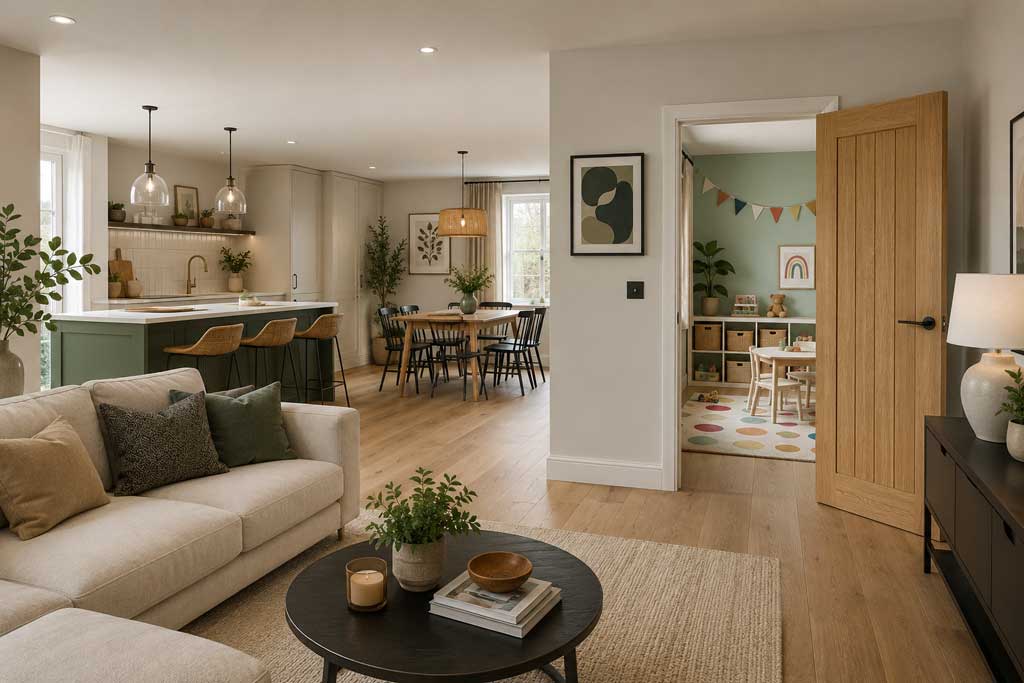
Open-plan living was sold as the answer to almost everything: more light, better flow, easier entertaining. In many homes, it does work well. But after a few years of kitchen noise, visible clutter and nowhere obvious to take a quiet phone call, plenty of people start to miss rooms they can close off.
That shift has changed how people think about interior doors. They’re no longer just practical dividers or something chosen late in a renovation. In a house where one space has to do several jobs at once, office, playroom, guest room, snug, the door starts to shape the feel of the room, not just the floor plan.
Material plays a large role here. Heavy, dark designs can make small rooms feel shut in, while pale timber finishes keep things calm and current. That’s one reason oak veneer doors keep coming up in discussions about modern interiors: they bring the warmth of wood without the visual weight that can make newer spaces feel overdone.
The quiet return of separation
There’s a practical side to this renewed interest in internal doors:
- they help keep cooking smells in open kitchen-diners under control;
- they cut noise between work and living areas;
- they allow different rooms to have their own character again.
None of this means giving up on open-plan design altogether. It suggests something simpler: homes work better when they give you options. Sometimes you want connected space and easy movement. Sometimes you want a boundary, however subtle. A well-chosen internal door can do that without drawing attention to itself.
In the end, good interiors are rarely about one big statement. More often, they’re shaped by small decisions that make daily life easier. The right door is one of those details, not flashy or attention-seeking, but influential once you notice how a home actually feels to live in.
Featured image credit: AI generated.